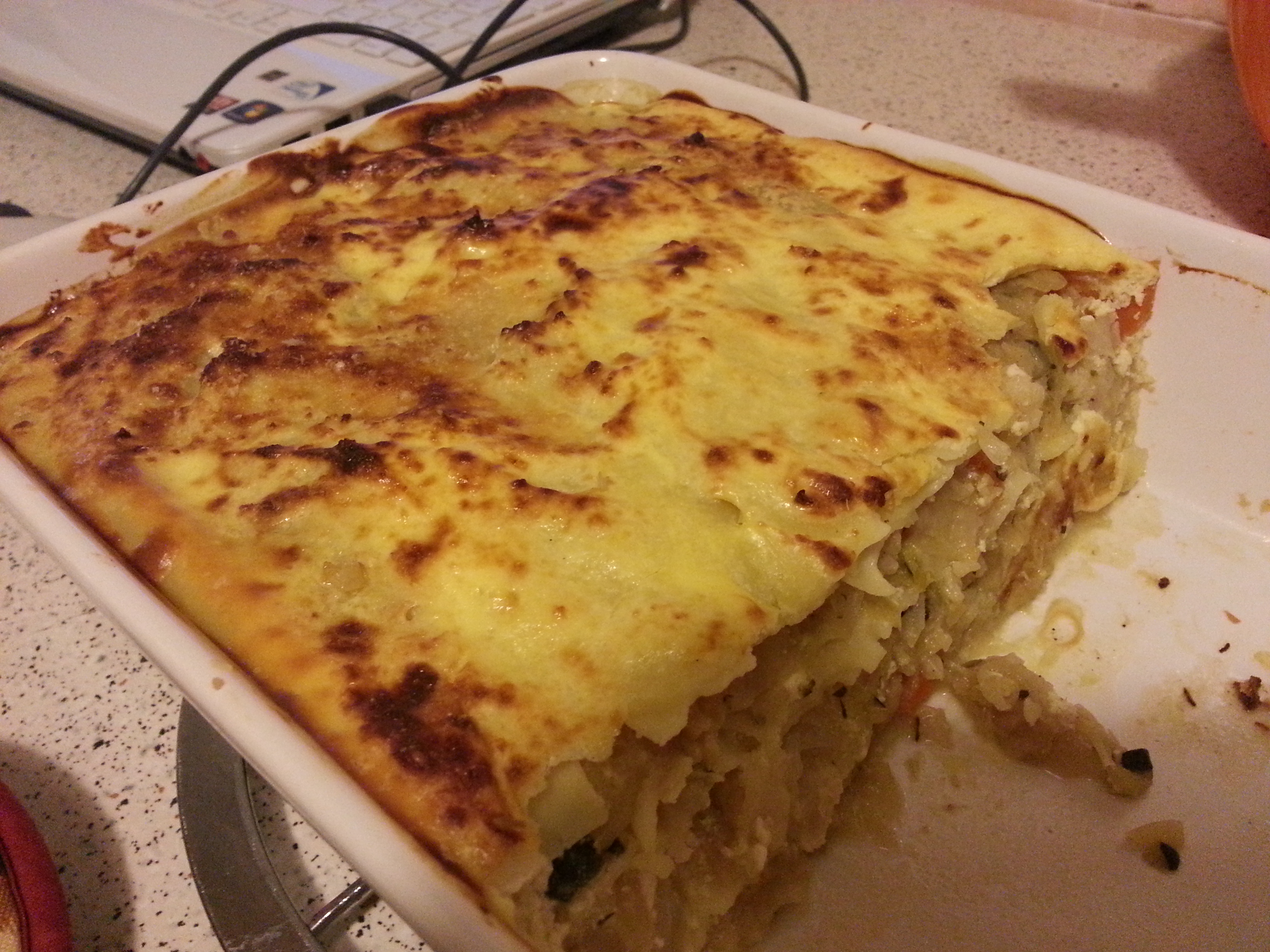
Oggi ho provato a fare delle lasagne vegetariane senza usare besciamella. E’ una ricetta che ho inventato al momento, ma l’esperimento è riuscito e le lasagne ottenute non sono niente male!
Ingredienti (per una teglia di 30cm x 20cm):
- Lasagne (4/5)
- 250 gr di ricotta
- 2 uova
- 1 zucchina grande
- 2 carote
- 1 porro
- 1 cipolla
- mezza verza
- mezzo cavolfiore
Preparazione del Ragù di Verdure
Tagliate a pezzetti un po’ grossi le verdure: cavolfiore, carote, zucchine.
La verza sarà difficile tagliarla a pezzettoni, basta tagliarla a striscioline.
Fare soffriggere cipolla e porro e mettere tutte le verdure ESCLUSE le zucchine. Le zucchine è meglio metterle a metà cottura perchè hanno un tempo di cottura inferiore alle altre verdure.
Coprire con un coperchio in modo da far cuocere al vapore per circa un’ora. Ricordatevi però che il tempo indicato è PURAMENTE INDICATIVO. L’importante è che le verdure si cucinino e si inteneriscano SENZA diventare una “pappa”.
Mettete sale e pepe secondo i vostri gusti.
La “Finta besciamella”
Nel frattempo mettete la ricotta insieme alle uova e ottenete una crema che sarà la nostra “finta besciamella”.
La Lasagna
Io ho cotto nell’acqua bollente salata le lasagne per metà della cottura indicata nella scatola. Questo permette di diminuire e migliorare la cottura una volta che le metterete in forno nella teglia, ma presenta una controindicazione: le lasagne bollenti sono difficili da manipolare e posizionare nella teglia. Forse sarebbe bastata una cottura classica solo al forno. E’ una prova da fare…
Gli strati nella teglia
A questo punto ci sono da farcire gli strati di lasagna nella teglia.
Non l’ho unta con niente, nè olio, nè burro, nè margarina. Ho semplicemente messo un po’ della “finta besciamella” sul fondo, poi ho messo la lasagna e poi il ragù di verdure.
Si continua così a formare più strati. Quando arrivate in cima alla teglia, cercate di avere la lasagna, sulla quale metterete la “finta besciamella” che vi rimane e una bella spolverata di grana grattuggiato (per ottenere la doratura e la crosticina).
Mettete in forno a 200° per circa mezz’ora, con la teglia nella parte alta del forno sempre per ottenere la doratura.
Chiaramente le verdure per il ragù possono essere diverse da quelle che ho usato io, quindi ci si può sbizzarrire a fare diverse varianti di queste lasagne. L’importante è ottenere qualcosa di simile ad un ragù, quindi niente verdure che si spappolano troppo. Chiedete pure se qualcosa non vi è chiaro o se avete dei consigli per migliorare la ricetta!